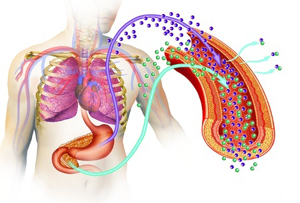
Principle #17 states that every effect has a cause and every cause has effects. This relates to many aspects of biochemistry in the body. An example of this is insulin and glucagon regulation of blood sugar. This cause and effect system has a important function and if one is missing, the whole system is thrown off.
When you are hungry your glucagon levels are low and after you have eaten your blood sugar levels (glycogen levels) are high. If blood glucose levels are high it causes insulin to be secreted. If blood glucose levels are low, not insulin is secreted. If blood glucose levels are low it causes glucagon to be released. If blood glucose levels are high, no glucagon is secreted. Each cause has an effect in these systems. After you eat, your food is converted to glucose and sent through the bloodstream, which causes your blood glucose levels to increase. Since too much glucose in the blood stream is bad, insulin is secreted to take the glucose from the bloodstream to the cells to be used as energy. If there is excess glucose, it gets stored as glucagon. This glucagon is then converted back to glucose and can be used for energy between meals when the body is hungry. This cause and effect system ensures that your body always has energy.
When this system is thrown off and insulin is not secreted it results in diabetes. This is also a version of cause and effect. The system’s cause is insulin not being secreted to regulate blood glucose levels and this leads to the effect: diabetes. The body has regular functions (causes and effects) that are normal and external environmental factors can alter these functions. This relates to chiropractic because if you introduce thoughts, traumas, and toxins into the body it can cause a negative effect on the body’s functions. Likewise when you add too much sugar to the body it can cause and abnormal effect of the body ceasing to secrete insulin. Every cause has an effect and every effect has a cause.


 Leszcynski Family Chiropractic